Saturday, November 1, 2025

America in 1896


American Flag

Freedom on Paper, Control in Practice

When I look around at America in 1896, I see a country that prides itself on liberty. The Civil War ended 31 years ago, slavery was outlawed, and the Constitution now promises equality for all. On paper, it sounds like progress. But in my opinion, that promise feels hollow. I see that, especially here in the South, almost none of that freedom is being lived.

Sometimes I tell myself that America has moved forward but then when you look back through we see the truth: the old ways never really left.

A Black sharecropping family in the South, 1890s,
 free in name but still trapped in poverty and dependence.

Economic Reality: Slavery’s Afterlife

After the war, freed Black families were told they could work for themselves. In reality, most entered into sharecropping a system that kept them tied to white landowners through debt. A typical deal worked like this, a white landowner let a Black family farm a small piece of land. In return, that family had to hand over a large share of the crop at harvest. But the landowner also controlled the seeds, the tools and even the store where the family bought food all “on credit.”

When I learned about this system, I couldn’t help but feel that it was slavery dressed in new clothing. The books were always kept by the landowner and the debt was always higher than the crop was worth. Debt meant you couldn’t leave. This was called debt peonage or debt slavery and it trapped families year after year.

So yes, the chains were gone. But poverty, dependency and control stayed. A Black worker in 1896 might be “free” under the law, but he was still working to make the same white man rich.

In some places, it went even further. Black men were arrested for the smallest things vagrancy, talking back, or simply being in the wrong place and then leased out to private businesses as punishment. When I discovered the details of this “convict leasing” system, I was shocked. It was free labor for companies, brutal work for the men, and profit for the state. Historians rightly call it an extension of slavery.

Enslaved labourers harvesting
sugarcane on a Southern plantation

Violence and Terror: Policing “Order”

Another part of daily life, and one I can’t ignore, is fear. White mobs carry out lynchings kidnappings, torture, and public killings meant to remind the entire Black community of its place. Between the end of Reconstruction in 1877 and the mid-1900s, more than 4,000 Black people were lynched in the South. Most killers were never punished, sheriffs looked away, juries refused to convict.

When I first read the reports from the Equal Justice Initiative, I felt sick. These were not secret crimes they were public events. People brought their families to watch. The goal wasn’t justice, it was control.

When a government refuses to protect its people, freedom is an illusion. It becomes survival under constant threat.

Voting Rights: Silencing Black Citizens

The Fifteenth Amendment, ratified in 1870, said the right to vote could not be denied because of race. On paper, that sounded noble. But in practice, I’ve seen the South rewrite the rules to get around it.

Formerly enslaved people
in the post Civil War South,
States introduced poll taxes, literacy tests, and “grandfather clauses” clever tricks that blocked Black voters while keeping white voters safe. Illiterate whites could vote if their grandfathers had, but since enslaved people could never vote, Black men failed the test before it began.

When I looked into Mississippi’s constitution of 1890, I realised how openly it was designed to keep power in white hands. Other states quickly followed.

By 1896, I could see that most Black Southerners had lost the right to vote without a single law saying “no Black man may vote.” It was all done through paperwork, taxes, and fear.

Everyday Life: Separation and Control

Even outside politics, separation rules every part of life. Lawmakers have made it clear that Black and white citizens should not share schools, restaurants, train cars, or even hospitals. They say it’s to preserve “peace.” I say it’s to preserve power.

Everywhere, there were message written on signs and in laws: one race belongs above the other. Black children grow up believing they are second-class. White children grow up believing that’s the natural order.

AI disclosure: Parts of this assignment were developed with the assistance of OpenAI’s ChatGPT. I used the tool to turn my script for my presentation into a 550 word minimum blog post. I also used it to help with organising historical information, improving clarity and grammar, and finding credible sources such as PBS, the Equal Justice Initiative, and the National Archives. All ideas were reviewed, edited, and finalised by me to ensure accuracy and originality. I added my opinion to every section to make it more of a personal blog.

Friday, October 17, 2025

Movie reflection

Original 1939 poster for Gone With the Wind

My Honest First Impression

I’ll be honest I had never seen Gone with the Wind before this, and I didn’t really know what to expect. I’d heard it was “a classic,” but usually when I hear that, I think old, slow, and overly dramatic. And yeah, that’s pretty much how I felt watching it. I can respect its place in movie history but personally it just didn’t click with me.

My First Reaction

From the opening scene, I could tell this movie was from another time not just because of the clothes and accents but the pacing. Everything moved so slowly. I found myself waiting for something exciting to happen and it just didn’t. I know it’s supposed to be an epic story of love, loss and survival but to me it felt more like a very long soap opera. I actually had to check how much time was left a few times, which probably says enough.

Two of cinema’s most iconic characters

Still, I have to admit, the set design completely impressed me. The costumes, the giant houses, the war scenes all of it looked so real and carefully done. For a movie made in 1939, the production quality blew me away. It really did feel like stepping back into the 1800s. The accuracy and attention to detail in how they portrayed that era were probably my favorite parts.

The Characters and My Lack of Connection)

I wanted to connect to the characters, but I just couldn’t. Scarlett O’Hara, played by Vivien Leigh, was frustrating. She’s selfish and dramatic almost the entire time. I know she’s supposed to be strong and independent, but I just couldn’t bring myself to like her. Rhett Butler, played by Clark Gable felt more interesting but even he came off as arrogant.

Mammy, portrayed by Hattie McDaniel, was honestly the only character who stood out to me. She had personality, humor, and common sense, unlike most of the others. Even though she didn’t have a huge role compared to Scarlett or Rhett, she felt like the only one who actually kept the story grounded. McDaniel’s performance was so powerful that she became the first African American to win an Academy Award she won Best Supporting Actress in 1940 for this role (Academy Awards Page). That moment was groundbreaking, even though she still faced discrimination; she wasn’t even allowed to sit with her white co-stars at the Oscars ceremony.

One of the film’s most famous scenes
The Good and the Bad

Even though I didn’t enjoy watching it, I can see why Gone with the Wind is so famous. The movie looks incredible, the cinematography, the grand scenes, the costumes, all of it feels like a huge accomplishment for its time. It won ten Academy Awards, including Best Picture, Best Director (Victor Fleming), and Best Actress (Vivien Leigh) (IMDb Awards Page)For a film that’s over 80 years old, that’s impressive.

But at the same time, it’s hard to ignore how outdated it feels. The way the movie romanticizes the Old South made me uncomfortable. It completely ignores the real horrors of slavery and instead presents this picture-perfect version of history that obviously wasn’t true. It felt strange to watch a movie that treats such a dark time like a backdrop for romance.

My Final Thoughts

To be completely real I probably won’t ever watch Gone with the Wind again. It’s just too long, too slow, and too far removed from what I usually enjoy. But I can appreciate what it accomplished. For its time, it was groundbreaking. The film captures the style, fashion, and mindset of its era almost perfectly. It’s like looking at a time capsule something to study and respect, even if you don’t love it.

Watching Gone with the Wind in 2025 was like walking through a museum beautiful, detailed and fascinating but not something I’d go back to for fun. It’s a piece of film history that deserves recognition for what it achieved but for me personally, it just didn’t hold my attention. I respect it but I didn’t enjoy it.

Wednesday, October 15, 2025

EOTO Presentations, Pro-Slavery vs. Anti-Slavery


Abraham Lincoln presenting the Emancipation
Proclamation to his cabinet in 1862.

Reflecting on the Pro- and Anti-Slavery Debate

During class, we explored different perspectives on slavery through video presentations and research, focusing on both the pro-slavery and anti-slavery arguments that defined the Antebellum period. These discussions helped me understand how deeply divided the United States was morally, politically, and economically before the Civil War.

Portrait of John C. Calhoun,
a leading defender of slavery and
 states’ rights during the Antebellum era
John C. Calhoun and the Defense of Slavery

One of the most striking figures we studied was John C. Calhoun, a politician who became the intellectual architect of pro-slavery ideology. Calhoun wasn’t just defending slavery out of habit he built an entire political philosophy around it. He claimed slavery was a “positive good,” arguing it benefited both enslaved people and society. Through his ideas about states’ rights and the “concurrent majority,” he gave the South constitutional justifications for protecting slavery and even for secession. Learning about Calhoun helped me see how ideas and politics were used to disguise cruelty as order and morality.


The Harsh Reality of Enslaved Life

While Calhoun and other defenders spoke about “benefits,” the reality for enslaved people was nothing but suffering. They worked from sunrise to sunset under brutal conditions, living in fear of separation and punishment. Families were torn apart in slave markets, and people were treated as property bought, sold, and traded based on age and strength. Despite this, enslaved communities developed ways to resist though faith, storytelling, and music. The Liberty of congress WPA Slave Narratives document countless firsthand accounts of these hardships and acts of resilience. Learning about their endurance reminded me that history is not only about laws and leaders it’s about human strength in the face of injustice.


Depiction of the 1627 Turkish Raid on Iceland
The Turkish Raid on Iceland

Learning about slavery also made me think about an event from my own country’s history the Turkish Raid of 1627, when North African pirates from Algiers and Morocco attacked the southern coast of Iceland. They captured hundreds of Icelanders, taking them across the sea to be sold as slaves in North Africa. Families were torn apart overnight, and many never returned home. According to the National Museum of Iceland and historical records from the University of Iceland, these events are remembered as Tyrkjaránið, or “The Turkish Abductions.” It’s strange to imagine that even in a small, isolated country like Iceland, people once experienced the same kind of fear and loss that enslaved Africans did. This connection reminded me that slavery isn’t just an American tragedy it’s a global one that has touched nearly every part of the world.

Frederick Douglass, a formerly enslaved man


Voices of Resistance and Reform

On the other side of the debate, abolitionists like William Lloyd Garrison, Fredrick Douglass and David Walker fought fiercely to expose slavery’s moral corruption. Walker’s Appeal to the Coloured Citizens of the World called for direct resistance, even violence if necessary, which terrified Southern states. Meanwhile, Garrison’s newspaper, The Liberator, demanded immediate emancipation and equality. Their courage showed me that moral change often begins with individuals willing to risk everything for justice.


Final Reflection

What stood out most to me through all this is how complex the debate over slavery really was. Political figures like Calhoun defended it as law and tradition, while abolitionists risked their lives to fight for freedom. Between these extremes were millions of enslaved people whose daily suffering fueled both sides’ arguments. Studying these perspectives and remembering stories like the Turkish raid in Iceland made me realize how fragile justice can be when law and morality collide, and how vital it is to remember the human cost of oppression everywhere.

Monday, October 13, 2025

AI vidio reflection

Reflecting on the History of Slavery

Depiction of the Atlantic Slave Trade

During class, we watched video presentations made by classmates about slavery in both the United States and the United Kingdom. These presentations helped me better understand not only the cruelty of slavery but also the strength and resilience of those who endured it.

John Calhoun and Pro-Slavery Beliefs

One video focused on John Calhoun, a man known for his strong pro-slavery beliefs. Hearing his statement that “slavery was a positive good” was shocking. While people in his time may not have called it good, they accepted it as a necessary part of life, showing how normalised injustice was in that era.

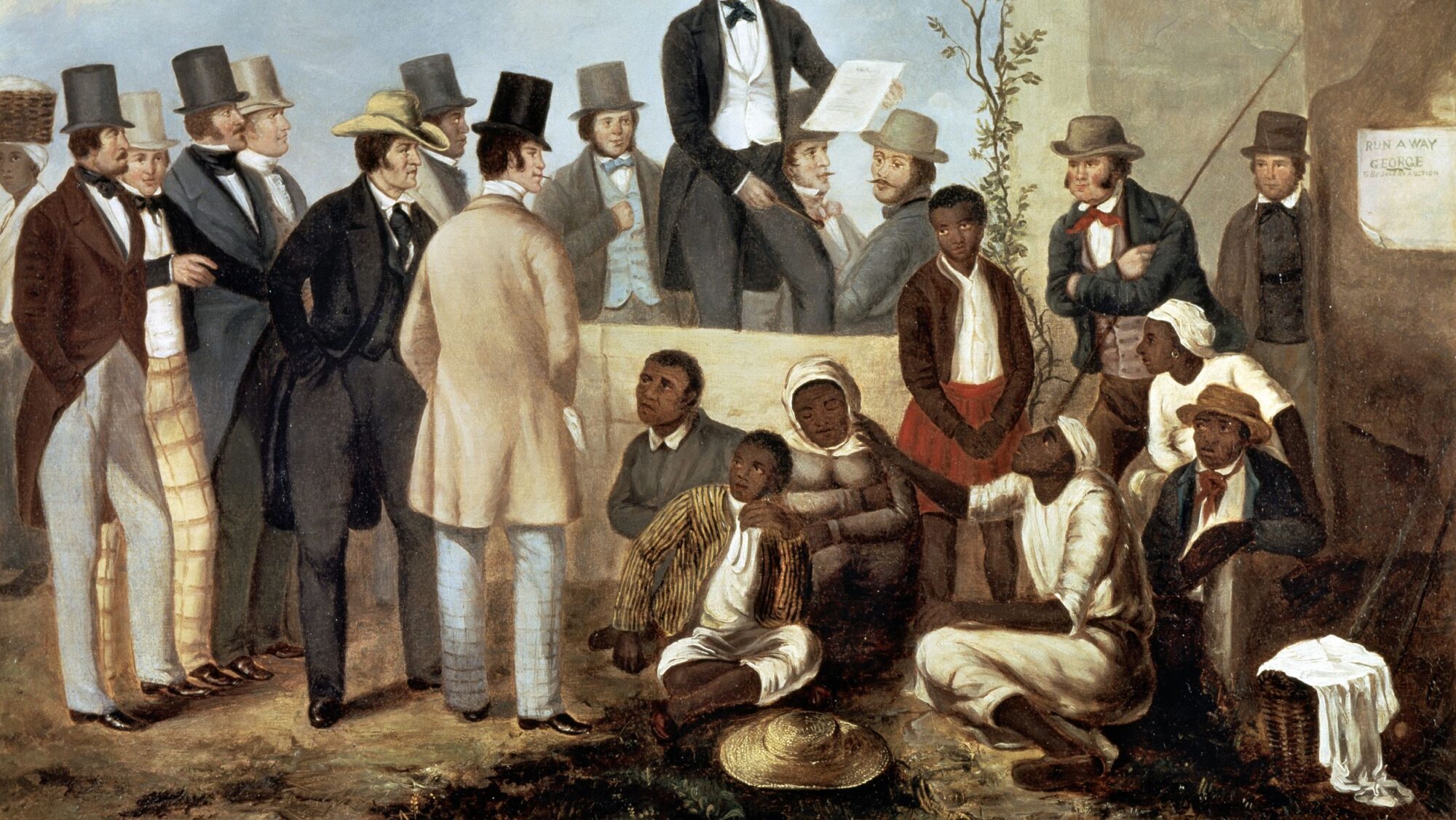
Slave Markets and Broken Families

Enslaved families being separated and sold
during the Antebellum slave trade

Another presentation explored the lives of enslaved families during the Antebellum period. Slave markets operated like livestock auctions, where people were inspected, priced, and sold. Cities like New Orleans, Richmond, and Charleston became centers of this brutal trade. Families were often separated parents from children, siblings from each other because buyers only purchased what they could afford. This part of history really struck me because it showed how people were treated purely as property, with no regard for love or family bonds.

Resistance and Escape

The videos also described the courage of those who tried to escape slavery. Runaways risked everything, facing harsh weather, starvation, and bounty hunters paid to track them down. Many used the stars to guide their way and relied on people who were brave enough to help them. Their determination represented more than just escape it was a fight for dignity and freedom.

The Abolition Movement in Britain

We also learned about the abolition movement in Britain. The James Somerset case in 1772 declared that slavery had no legal standing in England, inspiring hope for change. William Wilberforce later fought to end the slave trade, leading to major reforms like the Slave Trade Act of 1807 and the Slavery Abolition Act of 1833.

Final Thoughts

Overall, these presentations made me realize how deeply slavery shaped history and why remembering it matters. Learning about this past is not just about facts it’s about recognising the suffering, bravery, and humanity of those who lived through it.

AI Disclosure: I took notes on the videos and threw my notes into AI to organize them. I then wrote the rest adding new ideas, thoughts, images, and captions.

Tuesday, September 30, 2025

Edward Coles view on slavery

Edward Coles: A Governor Who Freed His Slaves and Stood Against Injustice
Painting of Edward Coles, second governor of Illinois


Edward Coles is not a name most Americans immediately recognise, yet his life and convictions offer a striking example of moral courage in the face of entrenched injustice. Born into a Virginia planter family in 1786, Coles inherited slaves as a young man but resolved from early on that he could not, in good conscience, remain a slaveholder. In his own reflections as a student, he wrote that slavery and justice were “contradictory and mutually exclusive,” a belief recorded in his notes and preserved by historians a
Steel Snowflake.


A mural or historical depiction of Coles freeing
his slaves en route to Illinois


Coles’ stance was rooted in his conviction that the ideals of the American Revolution — liberty and equality — applied to all people, regardless of race. He considered the ownership of human beings not only a moral crime but also a betrayal of the nation’s founding principles. In 1814, he went so far as to write to Thomas Jefferson, urging the former president to use his influence to promote gradual emancipation in Virginia, an appeal documented in the Founders Archives. Jefferson’s reluctance to take action only deepened Coles’ resolve to live by his own principles. 

When the time came to leave Virginia, Coles put his words into action. In 1819, while traveling west to Illinois, he gathered the enslaved people he had inherited and declared them free, telling them they were now “as free as myself.” According to records preserved by Madison County GenWeb, Coles ensured the act was permanent by providing each family head with 160 acres of land and recording formal deeds of emancipation. This was not merely a gesture of charity but a deliberate attempt to guarantee their security and independence. 

For Coles, emancipation was not only a moral imperative but also a practical responsibility. He recognized that without resources, freedom would be precarious and uncertain. By giving land, he provided a foundation for farming, family stability, and economic independence. Scholars have noted in JSTOR that Coles saw slavery as corrosive not only to those enslaved but also to the character of slaveholders and the health of republican institutions, undermining democracy through corruption and division. 

The debate over slavery in early America:
Thomas Jefferson vs. Edward Coles


Coles’ conviction that emancipation should be gradual but inevitable set him apart. While radical abolitionists called for immediate change and defenders of slavery resisted all reform, Coles advocated for a steady transition that would, over time, erase the institution entirely. As highlighted in Steel Snowflake, he argued that the challenges of emancipation could never justify perpetuating injustice. True character, in his view, was measured by the willingness to act on principle, even at personal cost. 

Although Coles would later become the second governor of Illinois, his legacy is best remembered in his personal stand against slavery. By freeing those he inherited, equipping them with land, and speaking publicly against the spread of slavery, he embodied the values of liberty he believed essential to the republic. His life reminds us that freedom cannot be selective, and that justice demands both conviction and action.

Thursday, September 18, 2025

Eight Values of Free Expression

Why Promoting Innovation Is the Most Important Value of Free Speech

Coming from Iceland to live here in America for college, I often heard a phrase I barely heard before: “free speech.” Back home I rarely heard it, but here I hear it almost every day from classes, social media, and just people talking about it around me. In class we read a lot about reasons why free speech matters; it brings truth, self-government, tolerance, dissent, and much more. They are all really important; however, for me, it is that free speech promotes innovation.

Innovation as the Driver of Progress

A quote from the founder of Apple on innovation
I feel like free speech is not only about talking about what they want; it's also a place where you should be able to talk about new ideas. If a society does not have that, they will stay in the past. I believe this because when looking back at all inventions, art, and businesses that changed the world, they could not have happened without people willing to try a different route than the so called traditional way. A good example of how free speech promotes innovations is Steve Jobs with Apple. When he first introduced the iPhone, a lot of people thought it was unnecessary or just silly, but his willingness to push a bold idea forward completely transformed how we live today. Having free speech, you encourage people to share their ideas even though they seem crazy, and that's where real progress happens.

Why Innovation Matters More Than the Rest

Yes, it's true that free speech can lead to truth, hold governments accountable, and even teach tolerance. Despite these benefits, it doesn’t necessarily mean that much if society doesn’t move forward. “Innovation is the child of freedom and the parent of prosperity.” A society that innovates becomes stronger, smarter, and better at solving problems. If there is no place for creativity in a society, there will be a risk of losing progress but, most importantly, of not creating a good future for all. I just look at all the great scientific breakthroughs like vaccines or renewable energy and how without free speech these ideas might've been shut down. It doesn’t only affect the business economy but also social progress like civil rights movements and gender equality that have depended on pesple speaking their minds about new ideas about how the world could be different. I see innovation as not just making life more convenient but also driving justice, equity, and opportunity. That’s why I believe protecting space for new and fresh ideas is essential, as it ensures that a society keeps building and not just survives but rather thrives.

 Final Thoughts

Being a 17-year-old from Iceland now studying in the US, I look at innovation as the core of free speech. I look at free speech as more than just words; it's about creating a world where creativity, curiosity, and innovation can succeed. When people have the opportunity to share their ideas, challenge assumptions, and imagine something better, society becomes more interesting. It can also lead to solving problems of today and tomorrow. That’s why promoting innovation is, to me, the most important value of free speech.

Tuesday, September 16, 2025

The Bible and Slavery: Arguments For and Against Biblical Support
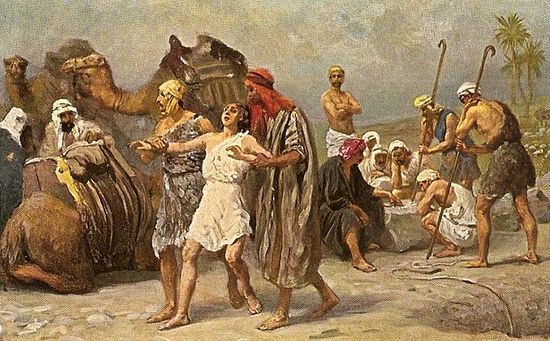
Slavery around the time of the Bible
Introduction 
    The relationship between biblical texts and slavery has been one of the most contentious debates in Christian history. During the antebellum period in America, both pro-slavery and abolitionist Christians used the same biblical texts to support opposing viewpoints. This analysis examines how the Bible has been interpreted both to support and condemn slavery. 

Biblical Arguments Supporting Slavery 
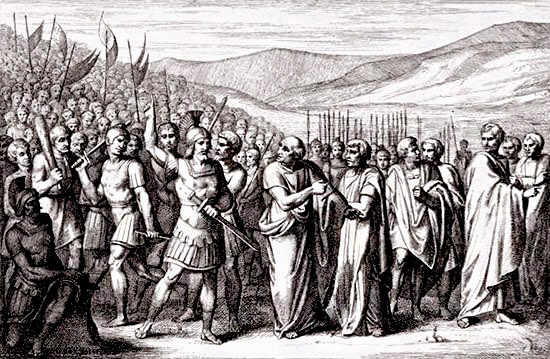
Slavery during the Roman Empire
    The Old Testament regulated rather than prohibited slavery. Leviticus 25:44-46 allowed Israelites to purchase slaves from surrounding nations and pass them as property to their children. Exodus 21:2-11 established rules for Hebrew debt-slavery with different treatment for male and female slaves. In the New Testament, slavery was widespread in the Roman Empire, and early Christian writings addressed it as an existing social reality. Pro-slavery Christians pointed to passages where Paul instructed slaves to obey their masters (Ephesians 6:5, Colossians 3:22) and returned the runaway slave Onesimus to his master Philemon. American slaveholders frequently cited the "Curse of Ham" from Genesis 9, claiming God created black people to be slaves through Noah's curse on his son Ham.

  Biblical Arguments Against Slavery 
    Christian abolitionists argued that Genesis 1:27, stating humans are made "in the image of God," provided the theological foundation for human equality and dignity that made slavery incompatible with Christian faith. They emphasised that all people possess equal value and worth as God's creation. The Bible prohibits kidnapping (Exodus 21:16, 1 Timothy 1:8-10). Abolitionists argued that since the transatlantic slave trade was based on kidnapping Africans, it violated clear biblical prohibitions against "man-stealing." Early Christian opposition existed as well—Gregory of Nyssa preached against slave ownership in 380 AD, demonstrating some early Christians saw slavery as morally problematic. 

Historical Context in America 
Slavery in America
I learned that pro-slavery Christians dominated the debate initially, using biblical texts to justify the institution. However, I found that abolitionists, though initially in the minority, gained support among Methodist, Baptist, Adventist, and Presbyterian denominations. Many members freed their slaves and sponsored black congregations where ministers encouraged slaves to believe freedom was achievable.
  
Conclusion
Through my analysis, I found that the biblical debate over slavery reveals the complexity of scriptural interpretation and cultural influence on biblical understanding. While the Bible contains passages regulating slavery as an existing institution, I discovered it also contains principles of human dignity, justice, and love that many Christians came to see as incompatible with slavery. I concluded that the fact that committed Christians on both sides could find biblical support demonstrates how cultural assumptions shape interpretation. Ultimately, I observed that the abolitionist interpretation gained dominance not necessarily because their arguments were more textually obvious, but because they emphasised broader biblical themes of liberation, justice, and human equality. This historical debate serves as a reminder of the importance of careful interpretation and awareness of how social context influences biblical understanding.

EOTO reflection

 Today I witnessed in my classroom a mock trial of Brown v. Board of Education , the historic 1954 Supreme Court case that reshaped public ...